
Gregories forest Pavon
Twenty Years of Regeneration in Southern Costa Rica
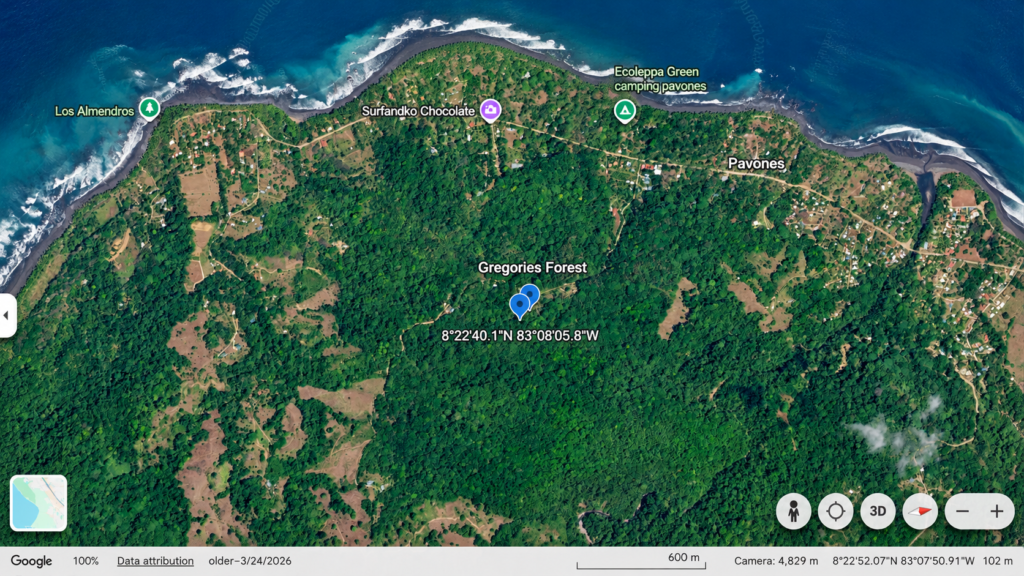
Near Pavones in southern Costa Rica, approximately 82 acres of once-degraded land have been allowed to return to forest.
Today, the landscape offers a living example of what long-term restoration can become when land is given the opportunity to recover.
Gregorie’s Forest is part of the story that inspired Bosque Marea’s approach to conservation:
protect what remains, restore what has been lost, reconnect fragmented habitat, and think in decades rather than seasons.
01
A Landscape Transformed
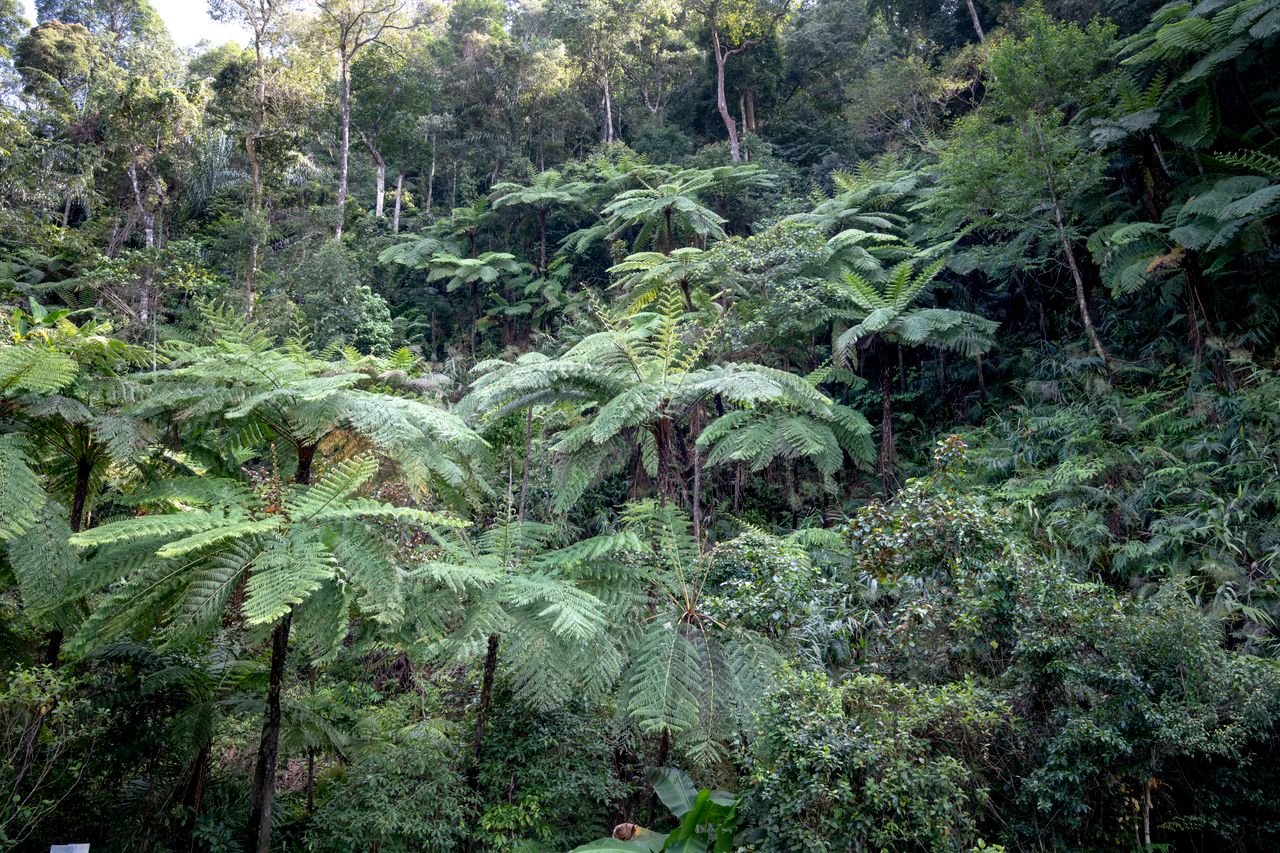
Trees must establish. Canopy must return. Soil must recover. Wildlife must rediscover the landscape.
Over roughly two decades, this property has undergone that transformation.
What was once degraded land is now increasingly part of the surrounding forest ecosystem, demonstrating the potential of long-term regeneration in one of Costa Rica’s most biologically important regions.
For Bosque Marea, Gregorie’s Forest represents more than successful reforestation. It demonstrates what becomes possible when land is protected long enough for ecological processes to begin working again.
02
Why This Forest Matters
Southern Costa Rica contains extraordinary biodiversity,
but much of its remaining habitat has been fragmented into disconnected patches.Individual properties may appear small when viewed on their own. Their ecological importance can be much larger.
A restored parcel can provide habitat, strengthen forest edges, expand existing ecosystems, and potentially help reconnect areas used by wildlife moving through the landscape.
This is the principle behind Bosque Marea’s broader conservation strategy. We are interested not simply in protecting more land, but in identifying the land that can create the greatest ecological value when protected and restored.
03
A Twenty-Year Lesson
Restore the links between larger ecosystems.
Gregorie’s Forest offers a rare opportunity to look beyond short-term restoration metrics.
Instead of asking only how many trees were planted, we can ask larger questions:
What does restoration look like after twenty years?
How does forest structure change over time?
When does wildlife begin returning?
How does a restored property interact with surrounding habitat?
And how can lessons from one landscape help guide future conservation decisions?
These are the questions Bosque Marea wants to continue exploring through long-term monitoring and future restoration projects.
04
From Restoration to Connectivity
Gregorie’s Forest helped shape a central idea behind Bosque Marea:
Restoration becomes even more powerful when it reconnects landscapes.
Across southern Costa Rica, relatively small parcels can sometimes sit between much larger areas of existing forest.
Protecting or restoring those missing links may allow conservation capital to produce an impact far greater than the acreage alone suggests.
Bosque Marea’s future projects will build on this principle by identifying strategically located land where protection and restoration can strengthen habitat connectivity.
Measuring What Happens Next
Put resources where they can create the greatest ecological leverage.
As Bosque Marea develops its monitoring work, Gregorie’s Forest can serve as an important reference landscape. Future ecological monitoring may include indicators such as: Forest regeneration and canopy development Native plant establishment Wildlife observations and camera-trap detections Habitat connectivity Changes in land cover over time Species presence and biodiversity indicators Our goal is to move beyond simple measures of activity and toward a clearer understanding of ecological outcomes.
The Bigger Picture
Conservation is not finished when land is purchased or trees are planted.
Gregorie’s Forest shows what can happen when restoration is given time. Bosque Marea’s work asks the next question: Where can we create the next connection? By identifying strategically important properties, restoring degraded habitat, and measuring ecological change over time, we aim to build a growing network of protected and recovering landscapes across southern Costa Rica.
Protect. Restore. Connect. Measure.